
DISCLOSURE: This post may contain affiliate links, from which I will earn a commission.
Whether you are keeping track of egg counts for preventive care or trying to solve an urgent problem, fecal testing is an important aspect of goat ownership. While mail-in labs are a great resource, results can take time to reach you. Most veterinarians can perform fecals, but these are often more expensive and might not always be quantitative.
Quantitative vs. Qualitative Fecals
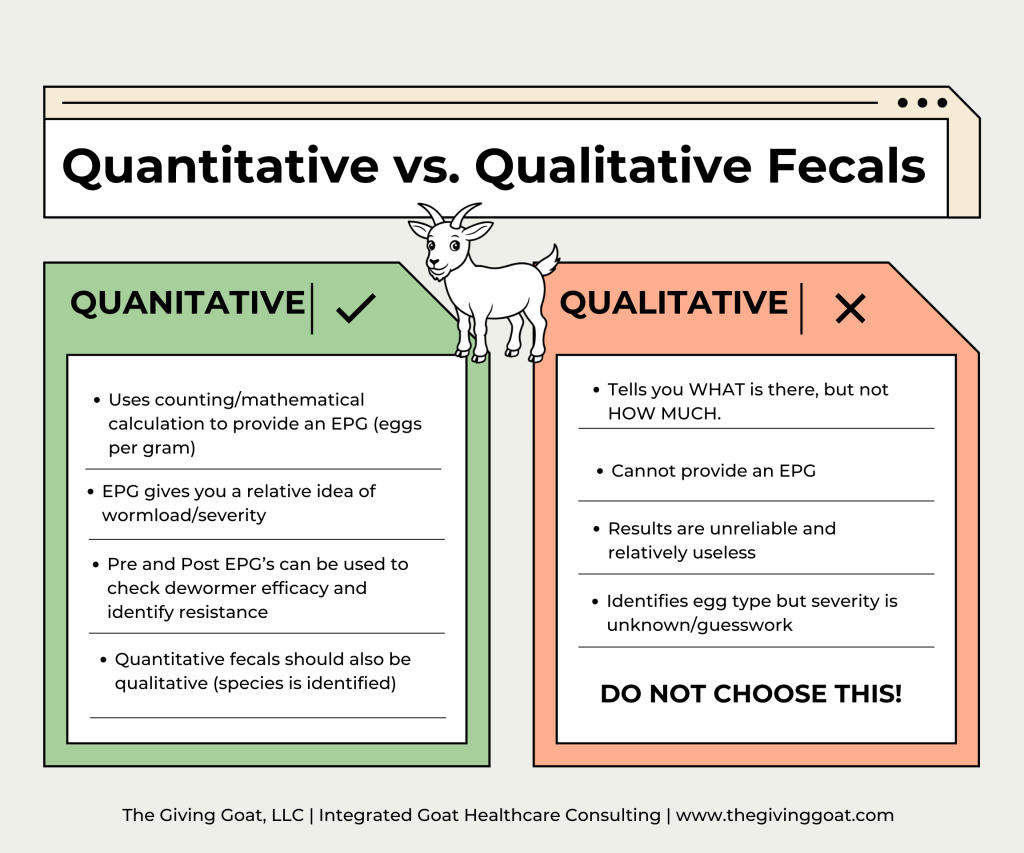
Qualitative fecals tell you WHAT is present, but counting/mathematical calculation is not performed, which prevents the determination of the relative severity or burden. These types of tests are not useful for goat owners, because goats are always expected to have positive tests, unlike dogs and cats. A positive test by itself does not mean a goat requires treatment. Many factors are considered when discussing parasite levels in goats.
Here’s the good news: you can do your own fecals for your herd all by yourself!
You simply need a microscope, McMaster slides, float solution (or make it DIY), and some other common household supplies. While the microscope is an initial investment, running your own fecals can save you a lot of money long-term. And maybe it’s just the goat nerd in me talking, but it’s also REALLY fun!
So put on your lab coat (kidding, unless you find that exciting–no judgment from me!), and get ready to learn!
When you finish reading this article, come back and click below to access my free (because I believe in goatkeeping, not gatekeeping) eBook to learn step-by-step how to perform your own fecal tests. The eBook is located on my Sellfy site which allows optional donations to be made to support the accessible learning provided by The Giving Goat, LLC. No payment is required, however. This eBook will provide the following:
- Materials “shopping” list
- Step-by-step sample preparation directions
- Counting & identification guidance
- McMaster calculations made EASY to determine EPG (eggs per gram)
- Tips & tricks
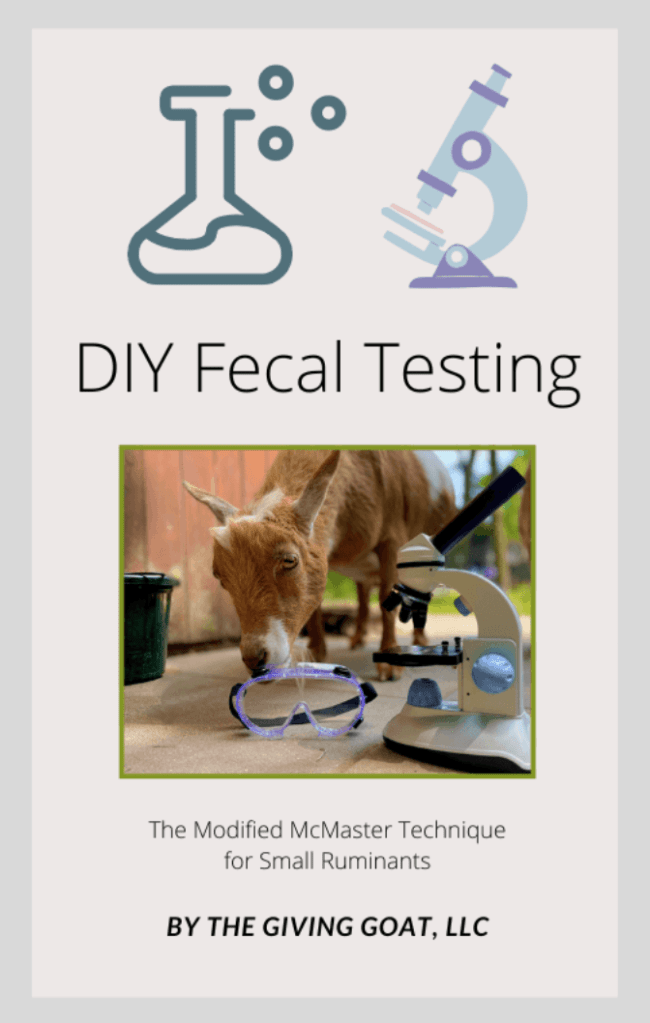
Click image or HERE to access.
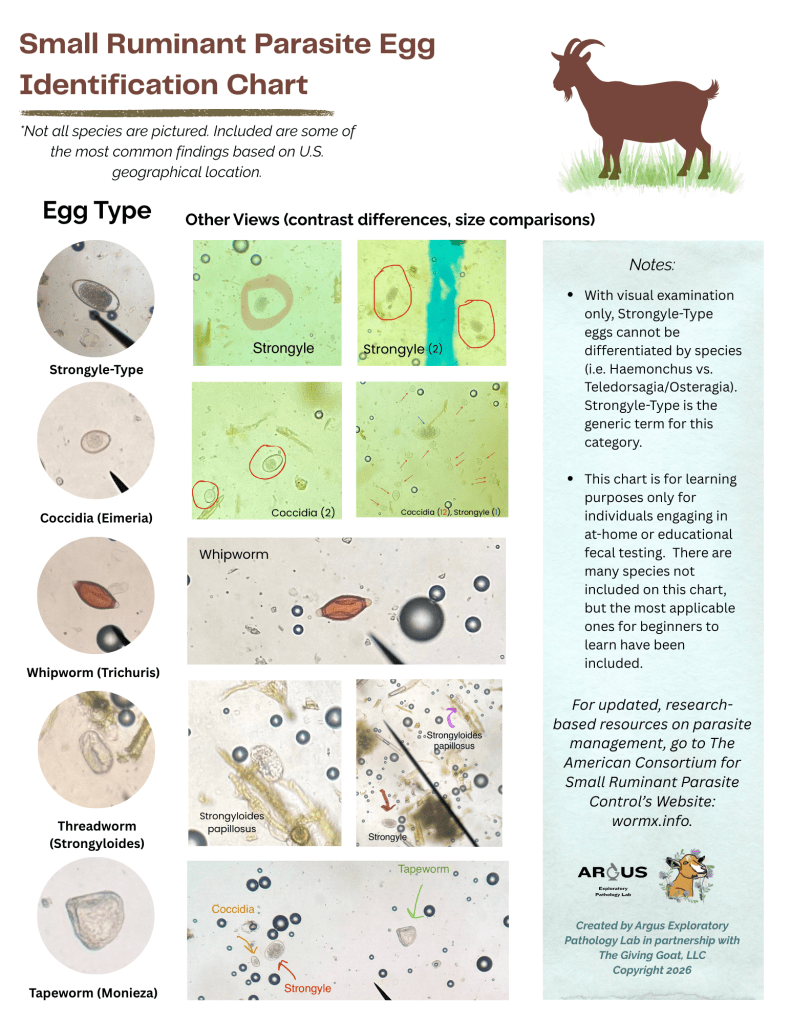
Now, one of the scariest parts for most people is identifying eggs. At first, everything in a sample can look like an egg. It is important to have good charts and example images to work from. There is a chart and some bonus photos included in the eBook, but below is a separate helpful graphic for identifying the most common findings. As always, photos of your findings can be sent to me via email or social media to discuss!
Click for full-sized resolution download.
The Takeaway
Self-sufficiency is vital for goat owners, and the ability to perform fecal tests is empowering (and can be life-saving). For any further information regarding the content of the eBook or egg ID, feel free to reach out to Hannah via any of the contact options below:
Email: thegivinggoat@gmail.com
Instagram via Direct Messaging: @goatlifegoodlife
Facebook Messenger: The Giving Goat, LLC
DISCLAIMER: I am not a veterinarian or licensed professional. The information shared here is based solely on my personal experience and is intended for educational and informational purposes only. It should not be considered veterinary advice, medical guidance, or a substitute for professional consultation. Nothing provided here is intended to diagnose, treat, or direct the care of any animal. Any decisions regarding your goats’ health, management, or treatment should be made in consultation with a licensed veterinarian. Goat care can vary widely based on individual animals, environments, and management styles. While I share what has worked for me, these perspectives may not be applicable to every situation. I encourage respectful, constructive discussion and recognize that each owner ultimately makes decisions based on what is best for their own herd.

 The Giving Goat, LLC
One thought on “HOW TO: At-Home Goat Fecal Tests (+eBook)”